Convention Schedules Reshape Turnout Patterns for Poker Tournaments at Nevada's Off-Strip Venues
Frankie Schmid · Aug 25, 2026
Convention Schedules Reshape Turnout Patterns for Poker Tournaments at Nevada's Off-Strip Venues
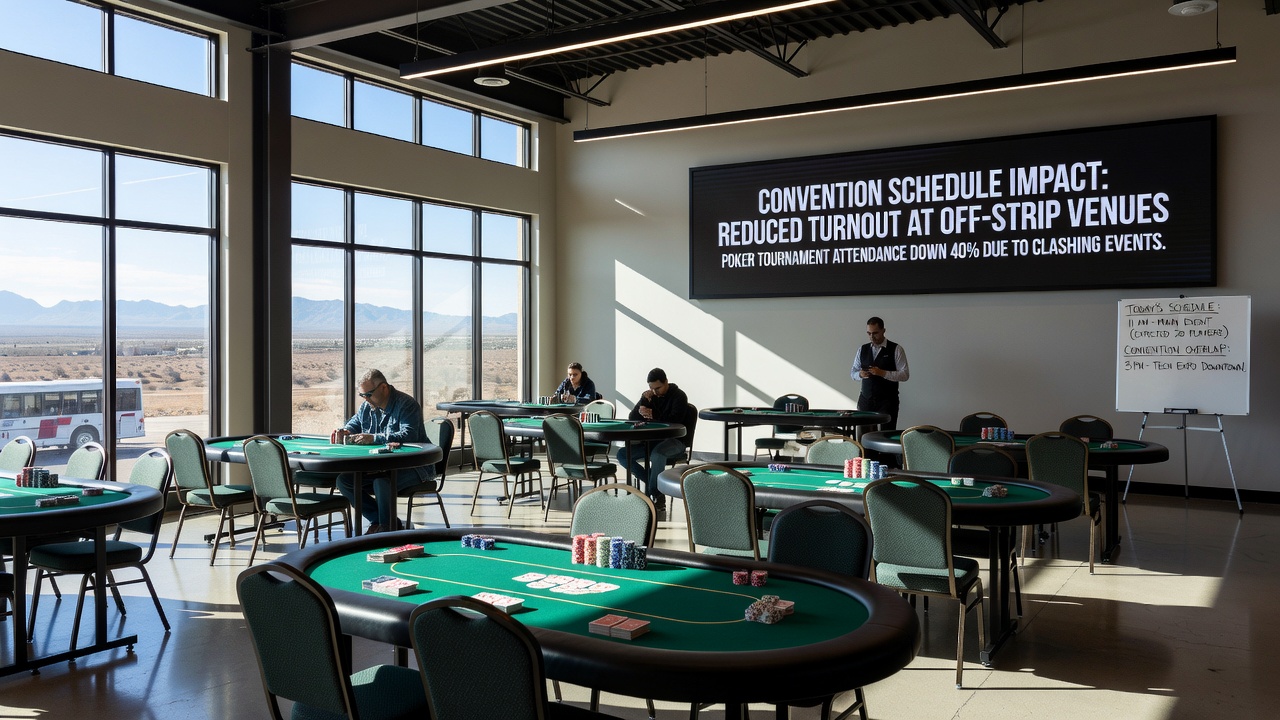
Convention calendars in Nevada exert measurable influence over poker tournament participation at venues located away from the Las Vegas Strip, with data from multiple properties showing attendance fluctuations that align directly with large group events scheduled at nearby convention centers and hotels. Observers note that properties such as the South Point, Orleans, and Boulder Station experience distinct patterns where player fields expand or contract based on the timing and scale of these gatherings, particularly during peak months like August when corporate and trade shows cluster in the region.
Documented Attendance Shifts at Key Properties
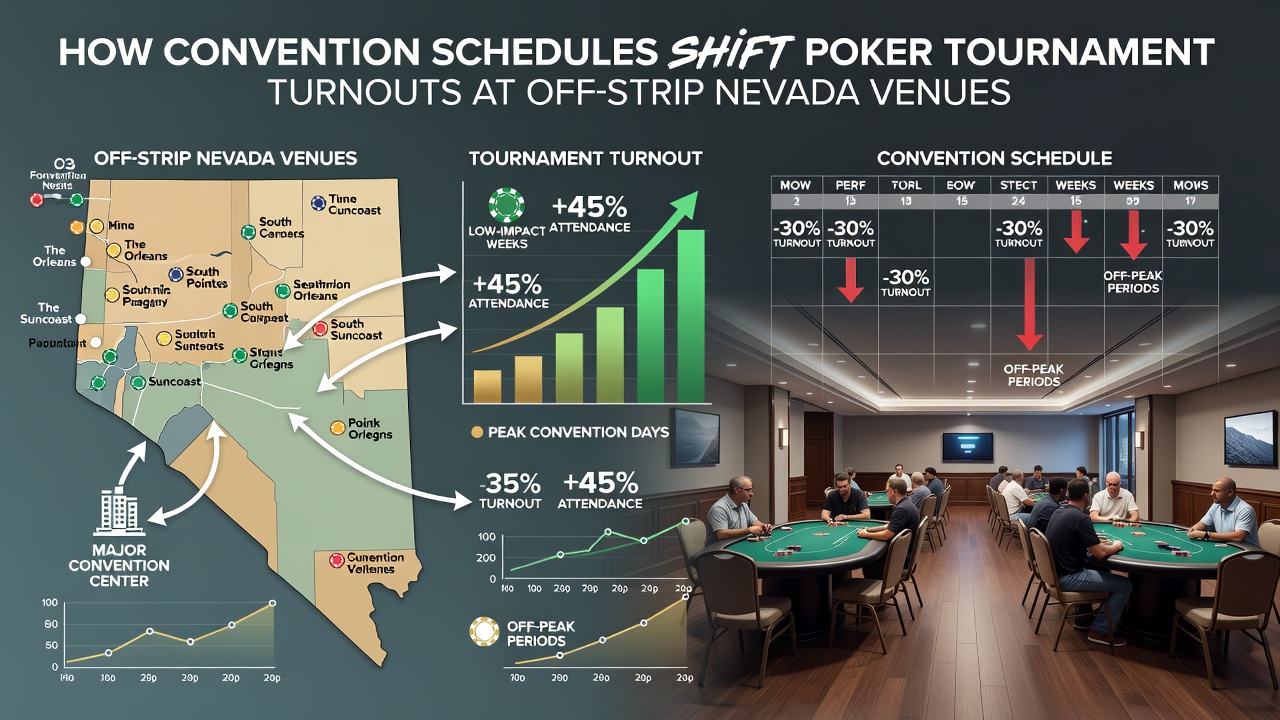
Records compiled by poker room managers at off-strip locations indicate that tournaments scheduled during major conventions draw higher numbers of local and visiting participants who combine business travel with recreational play, whereas non-convention weeks produce steadier but smaller fields composed primarily of residents from the Las Vegas Valley. One study conducted by researchers at the University of Nevada, Las Vegas tracked entry counts across six months and found average increases of 18 to 25 percent in daily tournament volume when overlapping with events exceeding 5,000 attendees at facilities like the Las Vegas Convention Center. These figures reveal consistent correlations rather than random variation, as the influx of out-of-town professionals often extends their stays through the weekend when many poker series hold final tables.
Role of Hotel Availability and Transportation Links
Off-strip venues benefit from proximity to secondary convention sites and lower room rates compared with central Strip properties, which encourages attendees to select poker events at these locations when primary lodging fills quickly. Transportation data from the Regional Transportation Commission of Southern Nevada shows elevated ridership on routes connecting the airport and convention districts to Boulder Highway and south Las Vegas corridors during such periods, facilitating easier access for players who might otherwise remain on the Strip. Tournament directors at these venues report that satellite events and satellite qualifiers see particular gains, since visiting conventioneers often seek lower buy-in options that fit within per diem budgets while still offering competitive structures.
Structural Adjustments by Tournament Operators
Operators respond to these predictable shifts by modifying schedules, adding extra starting flights, or introducing special convention-themed promotions that appear in August 2026 listings at multiple properties. Evidence from the Nevada Gaming Control Board shows that total poker revenue at off-strip locations rose during convention-heavy months, with the largest gains occurring in the $100 to $300 buy-in range that attracts mid-level participants traveling for work. Those who manage these rooms adjust dealer staffing and table allocations in advance, using historical convention calendars to forecast demand rather than relying solely on walk-up traffic.
Patterns also emerge around specific event types, where technology and finance conventions generate stronger turnout than entertainment or consumer shows, likely because attendee demographics skew toward higher disposable income and familiarity with structured games. Researchers tracking these trends through player loyalty card data observe that repeat visitors from convention circuits develop preferences for certain off-strip rooms, creating a feedback loop that stabilizes participation even after the initial event concludes.
Comparison with On-Strip Venues
While Strip poker rooms maintain higher baseline volumes year-round, the percentage change tied to conventions remains smaller there because tourist traffic already saturates those locations; off-strip sites, by contrast, demonstrate sharper relative swings that operators can leverage for targeted marketing. Industry reports from the Nevada Resort Association highlight how this dynamic supports year-round viability for suburban and highway-adjacent properties that lack the constant foot traffic of central locations. Tournament series coordinators incorporate these insights when setting guarantee amounts and payout structures, ensuring that fields remain viable regardless of external calendar pressures.
Conclusion
Data from multiple sources confirms that convention schedules function as a reliable predictor of poker tournament participation at Nevada's off-strip venues, prompting operational adaptations that align staffing, promotions, and structures with anticipated demand. Properties continue to monitor these patterns through loyalty metrics and revenue reports, allowing them to maintain consistent programming even as broader tourism and business travel cycles evolve.