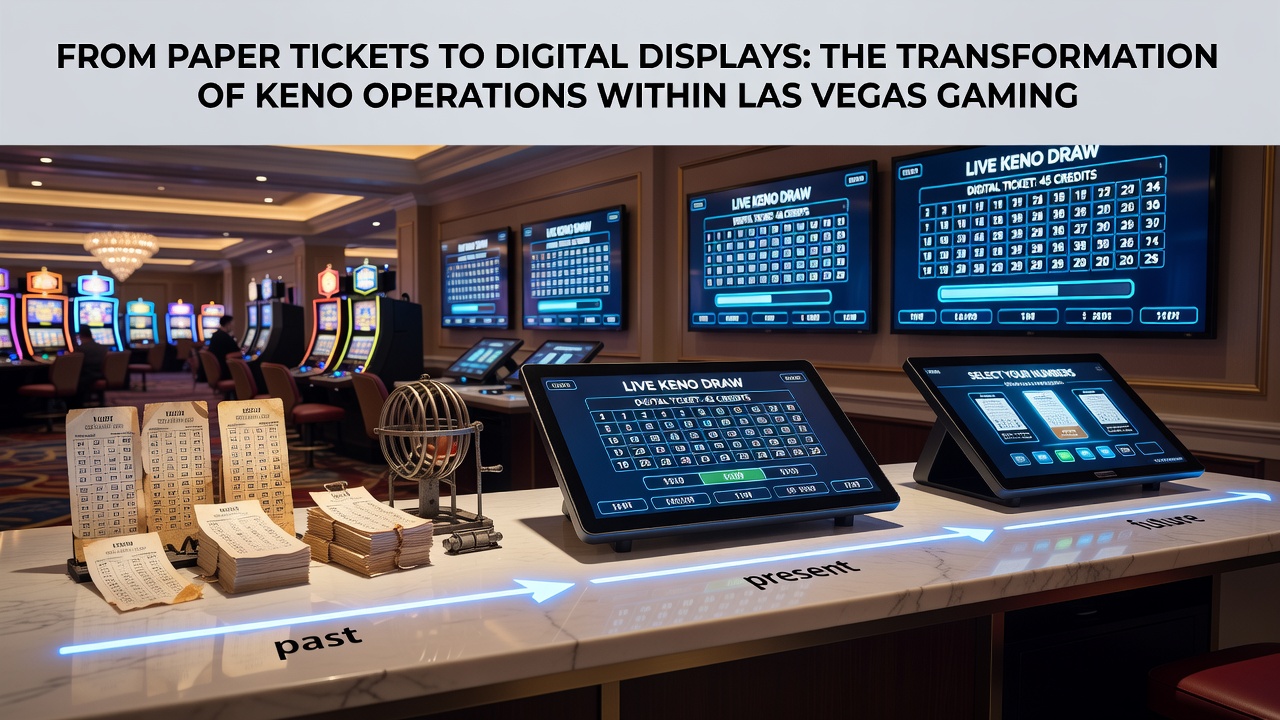
From Paper Tickets to Digital Displays: The Transformation of Keno Operations Within Las Vegas Gaming Floors
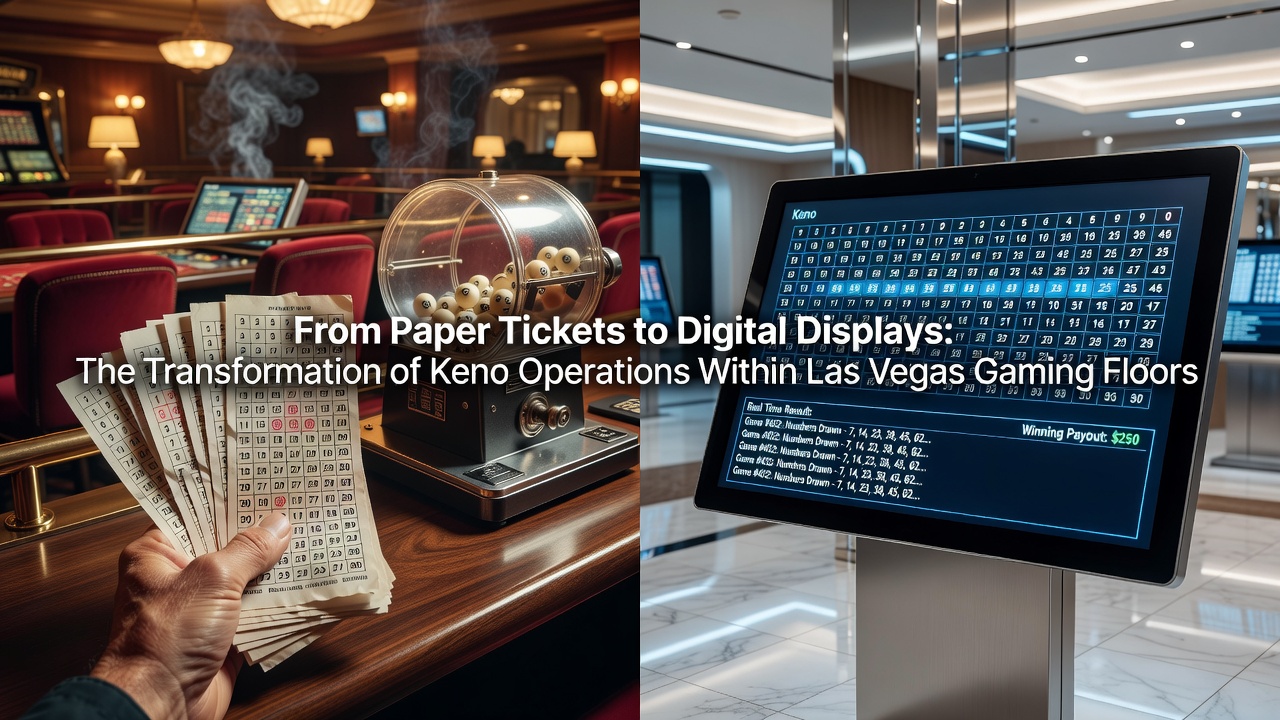 Keno arrived in Las Vegas during the mid-20th century as a straightforward numbers game that relied on paper tickets, manual marking, and frequent drawings posted on large boards throughout the casino floor, while operators collected wagers from players who selected numbers in hopes of matching those drawn from a hopper of numbered balls. This setup required dedicated staff to handle ticket sales, verify results, and distribute payouts, which created steady foot traffic in designated Keno lounges that often occupied prime real estate near slot banks and table games. Data from the Nevada Gaming Control Board shows that Keno generated consistent revenue streams through the 1970s and 1980s even as other table games fluctuated, yet the labor-intensive process limited scalability because each drawing cycle demanded coordination across multiple employees and physical ticket storage. Observers note that many properties maintained separate Keno counters where cashiers processed bets in cash or chips, and runners delivered tickets to central drawing areas, a workflow that persisted largely unchanged until electronic systems began appearing in the late 1990s. The transition gained momentum when casinos introduced computerized random number generators and electronic displays that replaced physical ball hoppers, allowing drawings to occur more frequently while reducing human error in number selection. Properties such as the Mirage and Caesars Palace installed early video terminals that let players view results on screens rather than printed boards, and these installations freed up space previously used for ticket storage and manual verification stations.
Adoption of Digital Keno Systems Across Major Properties
By the early 2000s several Strip resorts had integrated touch-screen kiosks that accepted cash or player cards, printed receipts on demand, and displayed live draws on overhead monitors connected to a central server network. This shift allowed operators to run drawings every few minutes instead of the traditional 15-to-20-minute intervals, increasing the number of games available during peak hours without additional staffing. Research indicates that digital platforms also enabled multi-game betting where one ticket could cover consecutive draws, a feature that boosted average wager amounts per player according to internal reports compiled by resort operators. Those who studied floor traffic patterns found that kiosks placed near high-traffic walkways captured impulse bets from slot players who previously bypassed the Keno lounge entirely. In July 2026 several downtown properties completed upgrades that linked Keno terminals directly to the same player loyalty databases used for slots and table games, permitting automatic comp accrual and real-time promotional offers displayed on the same screens. The Nevada Resort Association documented these installations at more than a dozen venues, noting that the unified systems reduced separate hardware requirements and streamlined accounting procedures for both cash and electronic funds transfers.