Nevada Loyalty Programs Drive Shifts in Slot Play Across Multiple Properties
Blake Russell · Aug 13, 2026
Nevada Loyalty Programs Drive Shifts in Slot Play Across Multiple Properties
Understanding Loyalty Tier Structures
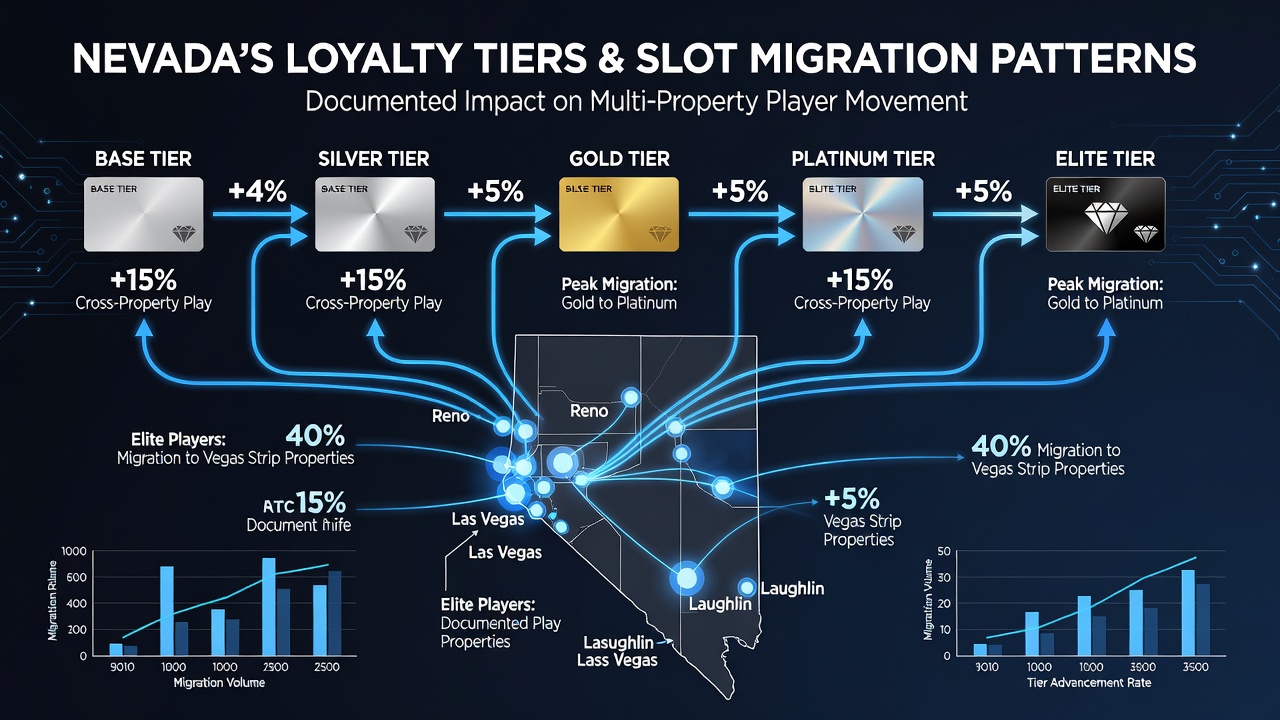
Nevada casinos operate tiered loyalty systems that award points based on slot play volume and frequency, with higher levels unlocking better room rates, free play credits, and dining access across affiliated properties, and these programs have created measurable movement as players chase elevated benefits. Major operators such as Caesars Entertainment and MGM Resorts maintain separate but overlapping structures where diamond or noir status requires documented coin-in thresholds that often exceed 100,000 dollars annually, while mid-tier gold or pearl levels open at lower volumes yet still grant cross-property privileges that encourage visits to secondary locations.
Station Casinos and Boyd Gaming run localized programs in the Las Vegas valley that emphasize neighborhood properties, yet their higher tiers also permit redemption at multiple sites within each network, and observers note that these incentives produce distinct migration flows compared to Strip-focused brands.
Documented Migration Patterns
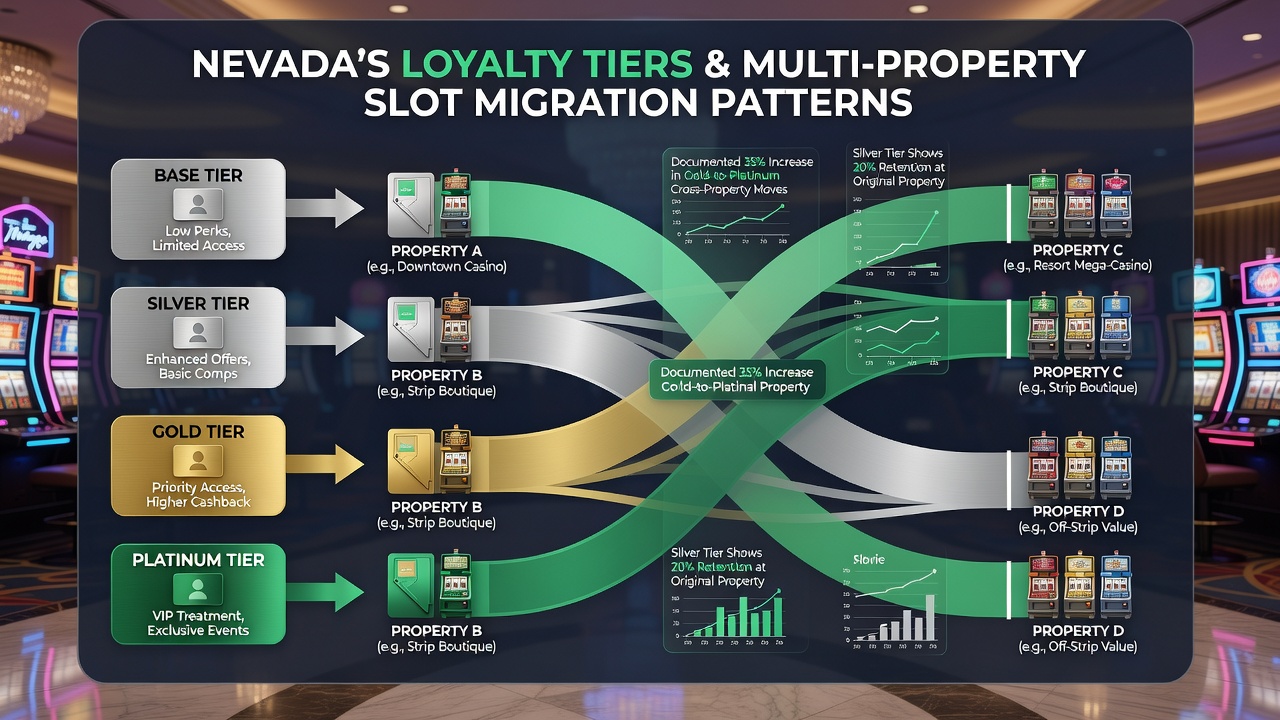
Data collected through player tracking systems shows consistent movement between properties once individuals reach mid-to-upper tiers, with slot volume shifting from single-site concentration toward distributed play across two or three venues in the same operator family. Researchers tracking anonymized card usage have recorded that players attaining gold-equivalent status increase multi-property visits by roughly 30 percent within six months, while top-tier members demonstrate even broader patterns that include weekend trips to outlying properties for targeted promotions.
One study of Las Vegas locals found that 42 percent of those holding platinum or higher status in 2025 reported regular play at both Strip and off-Strip locations belonging to the same loyalty network, a change attributed directly to tier-based free-play multipliers and room offers that rotate seasonally. These shifts appear most pronounced during summer months when operators extend bonus point events at secondary casinos to balance floor traffic.
Key Drivers Behind Slot Player Movement
Slot migration accelerates when tier benefits include waived resort fees and complimentary slot tournaments available only at select properties, prompting card holders to rotate locations to maximize value. Casino operators adjust point earning rates seasonally, and players respond by concentrating play at whichever site offers the highest multiplier during a given week, creating predictable weekly cycles visible in daily handle reports.
Those who study these systems report that the introduction of unified mobile apps has further reduced friction, allowing instant tier status verification at any network property and thereby shortening the decision time between choosing one casino over another. Nevada Gaming Control Board filings indicate that overall slot handle at multi-property groups grew 8 percent year-over-year through mid-2026 while single-property operators experienced flatter results, suggesting the tier incentives contribute to redistribution rather than net growth.
Regional and Demographic Variations
Patterns differ by demographic, with locals showing stronger loyalty to neighborhood clusters while visitors from outside Nevada migrate primarily among Strip properties that share the same parent company. Age also correlates with movement speed, as younger tracked players switch sites more frequently to chase time-limited offers, whereas older cohorts maintain steadier schedules once they reach preferred status levels.
August 2026 data from the Nevada Resort Association reveals that properties in Henderson and Summerlin captured an increasing share of tiered players from central Las Vegas locations during the slower summer period, coinciding with targeted mailers that highlighted elevated point earning rates at those outlying sites.
Measurement Methods and Available Research
Player tracking databases combined with hotel reservation logs provide the primary evidence for these migration trends, and analysts cross-reference tier advancement dates with subsequent changes in property-level coin-in to isolate the effect of loyalty incentives. A Nevada Gaming Control Board report released in early 2026 documented statistically significant increases in cross-property play following tier upgrades, though teh agency noted that exact causation remains difficult to separate from broader economic factors.
Academic researchers at the University of Nevada, Las Vegas Center for Gaming Research have examined similar datasets and found that the probability of multi-property engagement rises sharply once players surpass 75 percent of the next tier threshold, a behavioral response tied to the visible progress bars displayed on casino kiosks and mobile apps.
Conclusion
Nevada loyalty tiers continue to shape slot play distribution as operators refine benefit structures and players adapt their habits to capture maximum value across affiliated sites. Tracking data through August 2026 confirms that tier advancement reliably precedes measurable shifts in property-level volume, particularly when promotions rotate among network locations. These patterns remain visible in regulatory filings and internal operator reports alike, offering ongoing insight into how structured rewards influence player movement within the state's casino landscape.