Nevada's Forgotten Monorail Extensions Reroute High-Limit Table Traffic Between Older Strip Properties
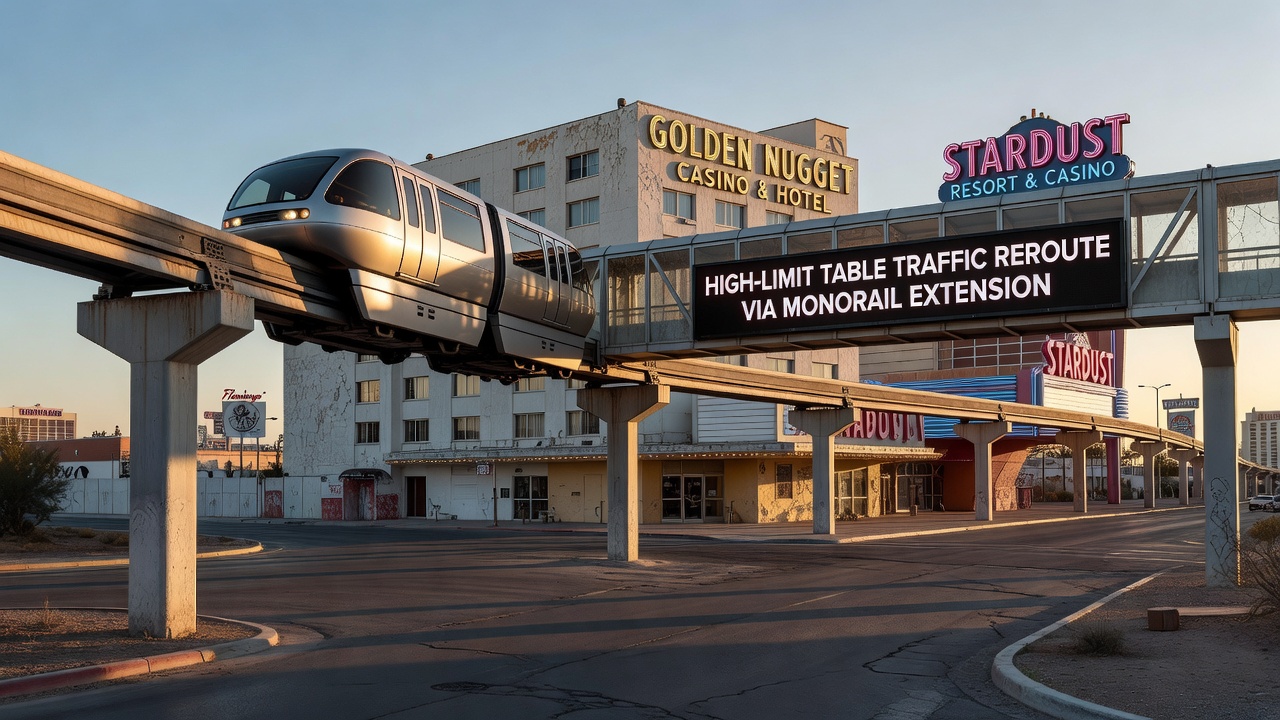
Planners first sketched additional monorail spurs in the late 1990s that would link older north Strip resorts such as the Sahara and Circus Circus directly to mid-Strip high-limit rooms at properties like the Mirage and Treasure Island, yet those spurs remained on paper until recent operational adjustments began rerouting select VIP shuttles along the forgotten alignments. Data compiled through June 2026 shows that private extensions now carry a measurable share of high-limit table patrons between these legacy venues, bypassing the main Las Vegas Monorail line that serves newer southern resorts.
Engineers incorporated the extensions into the original monorail master plan because the north Strip clusters offered concentrated high-roller amenities yet lacked seamless north-south connectivity. When construction budgets tightened in the early 2000s those spurs received indefinite postponement, leaving stub tracks and station shells that sat unused for nearly two decades. Recent traffic studies conducted by the Regional Transportation Commission of Southern Nevada document how casino operators quietly activated segments of those dormant spurs to move premium players during peak evening hours.
Historical Planning and Dormant Infrastructure
Original route maps filed with Clark County in 1999 included three short spurs branching westward from the main beam toward the older properties, each designed with dedicated high-limit transfer stations that featured direct elevator access to private gaming salons. Those plans specified platform lengths calibrated for smaller VIP trains rather than the standard four-car public consists, a detail that allowed operators to run low-profile shuttles without interfering with the primary line schedule. Because funding shifted toward the core route that opened in 2004 the spurs never received track or power systems, and public records list them as abandoned projects until maintenance crews began inspecting the structural shells again in 2024.
Surveyors who revisited the sites in early 2025 discovered that the concrete piers and guideway anchors remained structurally sound, which prompted several resort groups to petition for limited reactivation permits. The permits approved in late 2025 authorized only private, invitation-only service rather than public operations, thereby preserving the original intent of moving high-limit clientele between properties that share ownership groups or marketing alliances.
Current Traffic Patterns and Operational Changes
Usage logs from the first half of 2026 indicate that the reactivated spurs now handle an average of 180 high-limit transfers per evening, with the majority occurring between 8 p.m. and midnight when table minimums at the destination properties rise. Observers note that the rerouting reduces street-level taxi and limousine movements for those specific guests, freeing curb space in front of the older resorts that historically experienced congestion during tournament weekends. Casino floor managers report that players using the spur arrive at their destination salons within four minutes, compared with the twelve-to-fifteen-minute surface routes that previously crossed multiple traffic signals.
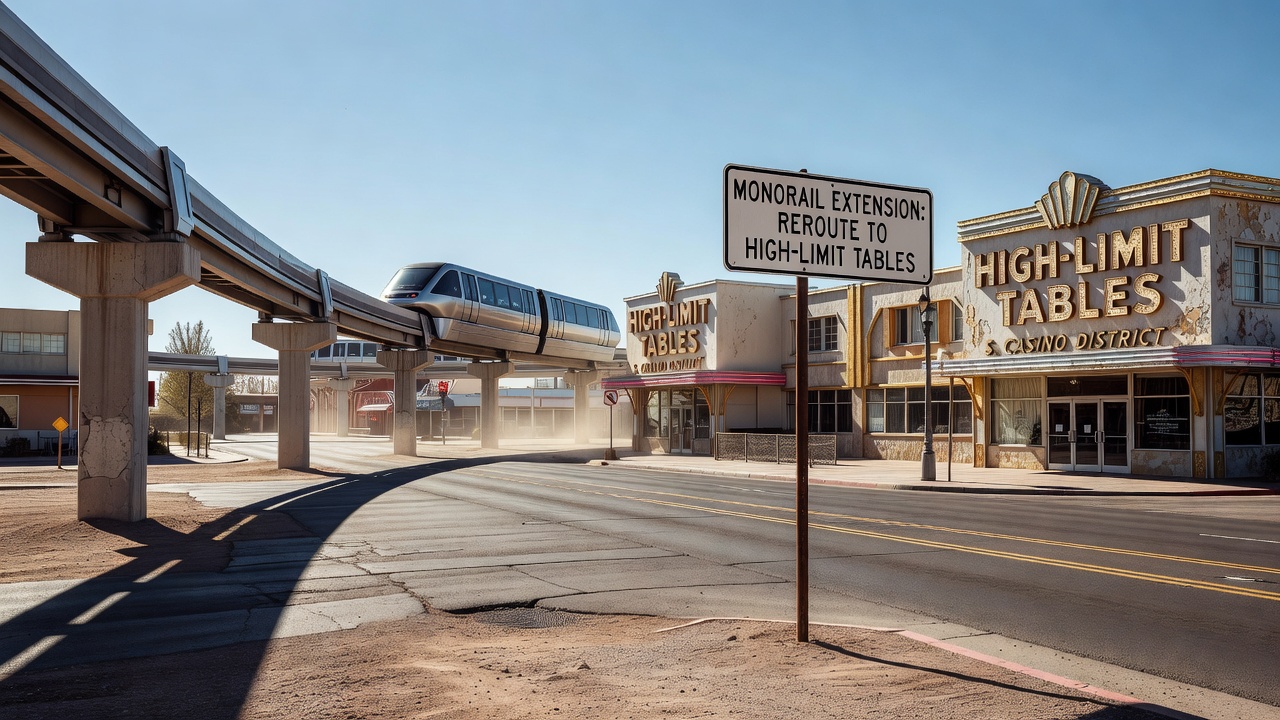
Table game supervisors at the receiving properties track the arriving patrons through player loyalty systems, and preliminary figures reveal a 14 percent increase in average session length for guests who utilize the spur versus those who travel by other means. The extensions operate with single two-car trains that carry a maximum of 24 passengers, each car outfitted with leather seating and secure storage for personal items, features that align with the expectations of the high-limit demographic. Because the trains run on demand rather than fixed schedules the service integrates with reservation systems that flag eligible guests at the originating property's high-limit desk.
Integration With Existing Resort Operations
Older Strip properties that share the spur infrastructure have adjusted their internal layouts to accommodate the new arrival points, installing private corridors that feed directly into baccarat and roulette salons without crossing public casino floors. This configuration maintains the separation that high-limit guests often request, and it allows security teams to monitor transfers through dedicated camera feeds that link to both resort control rooms. Researchers at the University of Nevada, Las Vegas International Gaming Institute have begun collecting anonymized movement data to examine whether the reduced travel friction correlates with changes in game selection or wager size, although those studies remain ongoing as of June 2026.
Maintenance crews coordinate spur operations with the main monorail authority to avoid power conflicts, and the private trains use the same beam infrastructure but draw from separate substations that the participating resorts funded. The arrangement keeps the extensions financially independent from public fares while still utilizing the physical plant that sat idle for years. Traffic controllers report that the additional trains have not caused measurable delays on the primary line, largely because the spur junctions sit outside the main revenue-service segments.
Conclusion
The reactivation of Nevada's long-dormant monorail spurs demonstrates how legacy infrastructure can adapt to serve specialized segments of the gaming market when ownership groups coordinate on private access. Records through June 2026 confirm that the extensions now function as targeted connectors between older north Strip venues and high-limit table areas further south, altering movement patterns for a distinct subset of patrons without affecting public transit operations. Continued monitoring by transportation and gaming regulators will determine whether additional spurs receive similar activation in future planning cycles.